Hannah Schmidt's postwar trauma and estrangement
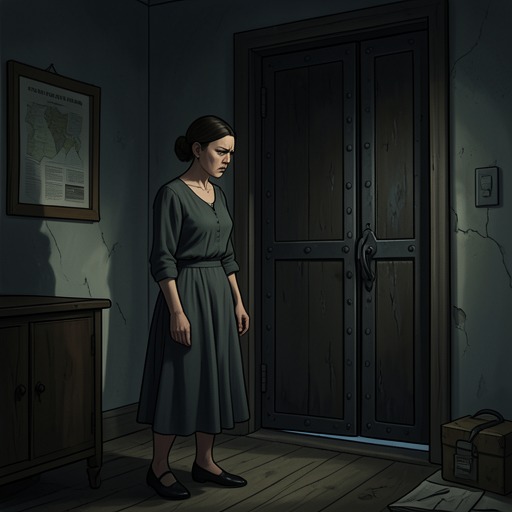
The Zone of InterestHannah Schmidt's postwar trauma is not a wound that time has closed: in 1948, she remains unhappy, afraid of people from the camp years, and unable to imagine a return to intimacy or ordinary life. Her encounter with Thomsen makes the damage visible in a changed relationship: the person she once associated with sanity and decency now carries the past back into the present. Hannah refuses the consoling idea that survival itself proves recovery, or that anything good can come from the place that shaped them.
The Past in the Present
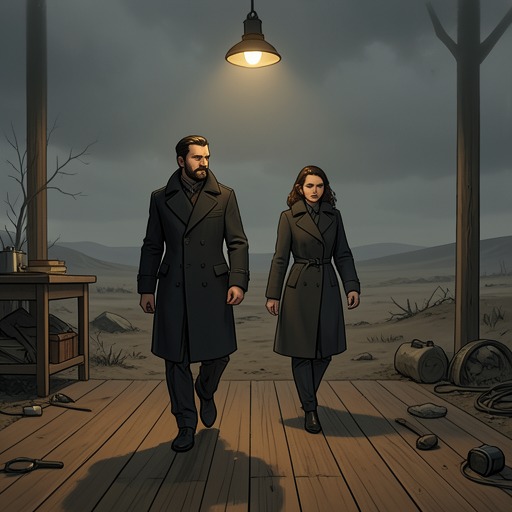
The postwar section begins with Thomsen returning to Hannah and then pursuing a search for her maiden name. That search frames their meeting in Rosenheim, where the ordinary procedures of civil records cannot readily restore a comprehensible past. Thomsen spends a week’s leave making rounds among the town’s eighteen borough offices, but after a great deal of effort he has examined only three ledgers, without gaining any useful information. The archival failure sits beside Hannah’s own difficulty in living with what cannot be made ordinary by the passage of time.
Her unhappiness is persistent rather than a reaction confined to the meeting. When Thomsen acknowledges that she was unhappy when he reappeared, she corrects the implication that the feeling has ended: she has continued to be unhappy and remains so. She has also lived in dread of seeing anyone from that period. Even the prospect of seeing Humilia, whom she says is all right, is more than she thinks she could bear. She describes her inability to face the past as weakness, but the scene presents it as the continuing force of experience, not as a brief reluctance that a reunion can dispel.
Fear, Memory, and Bodily Triggers
Hannah’s fear is specific and physical. She cannot stop imagining that she will see Paul Doll, and says that seeing him would kill her; the thought of his touching her produces an even sharper response. Her dread makes the past immediate: it is not simply a recollection of what happened but the anticipation that the person associated with it might re-enter her bodily space. When she speaks, she shudders and writhes. Her face, too, bears the passage of time: her dark hair, wide mouth, and square jaw remain recognizable, while two furrows have formed beside the bridge of her nose.
She also describes an involuntary sensory return. Seeing Thomsen takes her back; with him comes the smell of the place, which she does not want to encounter again. She explains that, in the past, he had stood for what was sane, decent, normal, and civilized. That association has been overturned. He is no longer, to her, a refuge from the camp years: his presence reconnects her to them. The contrast clarifies why his reappearance does not simply revive an earlier bond. The same person can embody a remembered possibility of decency and, in the present, trigger a memory she cannot bear.
Relationships and the Refusal of Recovery
Hannah links her estrangement from men to what she has lived through. She describes her marriage to Paul Doll, whom she identifies as one of history’s most prolific murderers, and calls him coarse, prissy, ugly, cowardly, and stupid. She also recalls Dieter Kruger as hopeless in a different way, his mind filled with Stalin’s ideas. These judgments do not make her history feel safely past; instead, her account turns from the men she knew to her present inability to imagine being with any man. She says that she has not looked at men in years and considers herself finished with them.
Her refusal is not merely a declaration of romantic preference. When Thomsen suggests that she has no right to say she is finished, Hannah answers that the central fact is that she and he survived the place. She acknowledges that she did not endure the bodily losses and terrors he describes, including the loss of hair and body weight, the murder of parents and girls, the fear of uniforms, crowds, flames, and sleep, and the pain that seems never to stop. Her agreement that she did not experience those things leads not to a claim of equivalence but to her own conclusion: they do not deserve to come back from it. Her words distinguish surviving from being restored, and make clear that an end to the war has not ended the injury.
The Zone of Interest
Hannah’s response belongs to the book’s broader account of what National Socialism disclosed about people. Thomsen reflects that the period forced victims, perpetrators, collaborators, witnesses, conspirators, martyrs, and minor obstructors to discover or reveal who they were. He calls that revelation the zone of interest. Hannah is included among the minor obstructors, but the category does not erase the difference between her experience and that of the victims whose suffering Thomsen names. The narrative instead holds together moral exposure and unequal injury: people were revealed by the same historical world without suffering it in the same way.
That distinction shapes her final refusal of a redemptive account. Thomsen asks whether she is truly cowering in Rosenheim and finished; Hannah turns away and says that who she is does not matter. What matters, she insists, is how disgusting it would be if anything good came out of that place. The exchange closes without reconciling her to the past or offering her return to a former self. Against the language of peace and freedom, Hannah’s condition shows that physical release does not guarantee inward recovery. Her trauma persists in fear, smell, memory, and estrangement, and in her conviction that survival cannot be made into a comforting moral outcome.